How Long to Keep Your Business Records?
As an entrepreneur, it's crucial to know how long you need to keep your business records. This blog explains the legal retention periods and provides practical tips.
What is the record retention period?
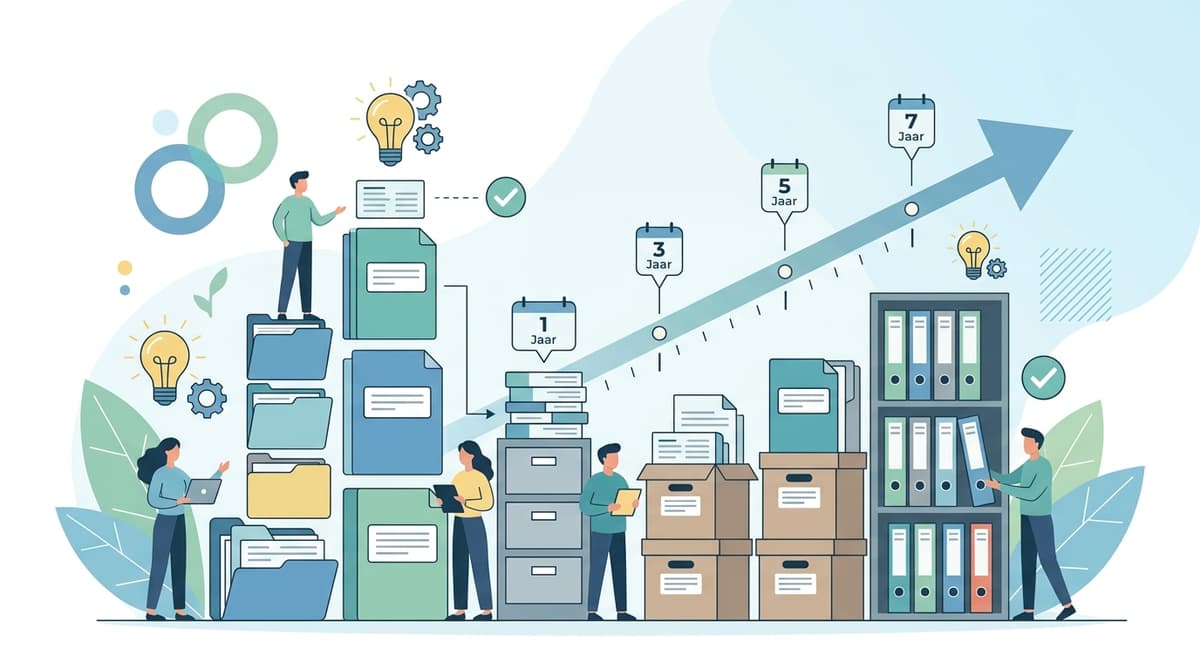
As an entrepreneur in the Netherlands, you are legally obligated to retain your business records. But how long exactly? The main rule is that you must retain your records for a minimum of 7 years. For certain data, such as data related to real estate, a retention period of 10 years applies. This obligation applies to both paper and digital records. Correctly retaining your records is essential to comply with the requirements of the Tax Administration and to protect yourself in the event of audits. This includes invoices, bank statements, contracts, and other relevant documents that provide insight into your financial situation.
Who Does This Apply To?
The obligation to retain your records applies to almost all entrepreneurs in the Netherlands. This includes: * ZZP'ers (Self-Employed Without Personnel): Even as a small self-employed person, you are required to retain your records correctly. * SMEs (Small and Medium-Sized Enterprises): Companies of all sizes, from small shops to larger manufacturing companies, must retain their records. * BV (Private Limited Company): The same retention periods apply to BVs as to other forms of business. * Sole Proprietorship: As the owner of a sole proprietorship, you are also required to retain your records. It does not matter what sector you operate in; the retention obligation applies to everyone who runs a business. It is important that how long you should keep business records is a serious obligation, regardless of the size of your company.
How Does It Work in Practice?
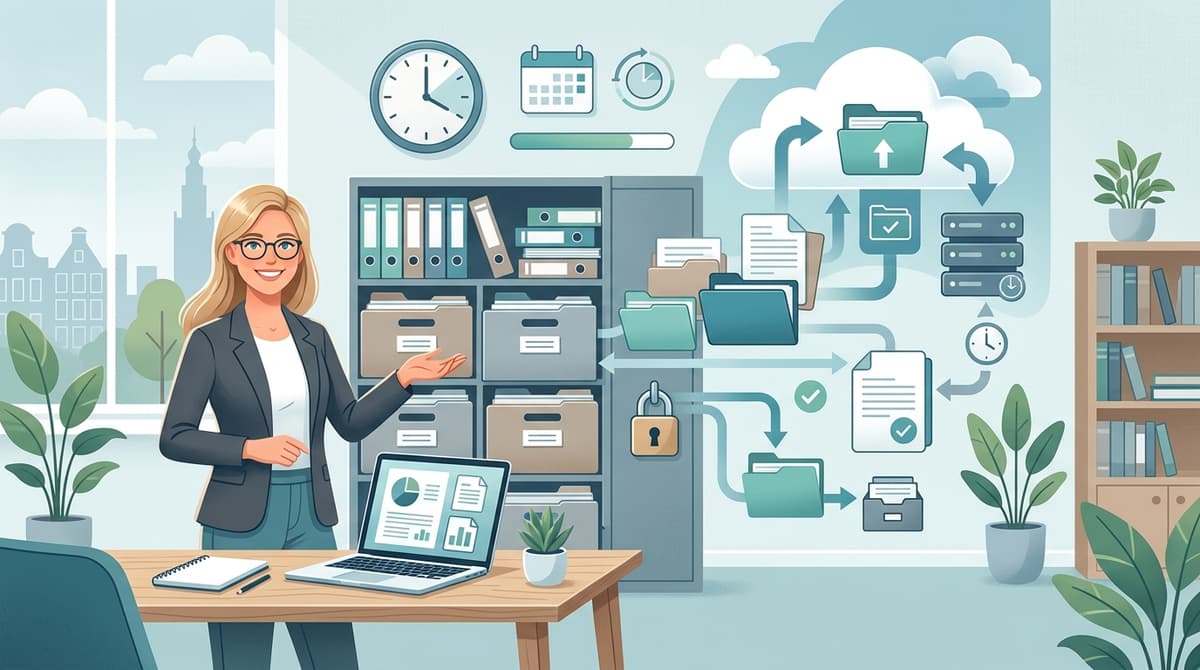
In practice, how long to keep business records means that you need to set up a system to keep your documents organized. Here are some concrete steps: 1. Digitize your documents: Scan paper documents and save them as PDF files. Ensure clear file naming, for example, 'Invoice_CustomerName_Date.pdf'. 2. Use cloud storage: Use cloud storage services such as Google Drive, Dropbox, or OneDrive to securely store your digital records. This also offers the advantage that you can view your documents anywhere. 3. Keep original documents: Although digitizing is useful, it is wise to keep certain original documents, such as contracts, physically. 4. Make backups: Ensure regular backups of your digital records to prevent data loss. 5. Keep a register: Create an overview of which documents you keep and where you can find them. This makes it easier to find documents in the event of an audit. Example: Suppose you received an invoice from a supplier for €5,000 in 2024. You must keep this invoice until at least the end of 2031 (7 years after the end of the financial year). If the invoice relates to a commercial property, you must keep it for 10 years.
Important Rules and Points to Note
When considering how long to keep business records, there are some important rules and points to note: * Legal retention period: The standard retention period is 7 years. A period of 10 years applies to real estate. * Start date of retention period: The retention period starts at the end of the financial year in which the document was drawn up. * Form of retention: You can keep your records digitally or on paper, as long as they are legible and accessible to the Tax Administration. * Foreign records: If you do business abroad, different retention periods may apply. Consult local legislation for this. * Fines: Failure to comply with the retention obligation can lead to fines from the Tax Administration. It is crucial to know that the Tax Administration carries out random checks. So make sure your records are always in order. You can find more information about this on the Tax Administration website.
Common Mistakes
Many entrepreneurs make mistakes when it comes to how long to keep business records. Here are some common mistakes: 1. Discarding documents too early: Many entrepreneurs throw away documents after a few years without realizing that the retention period is 7 years. 2. Not making backups: Not making backups of digital records can lead to data loss, which means you cannot comply with your retention obligation. 3. Unorganized records: An unorganized administration makes it difficult to find documents during an audit. 4. Incorrect interpretation of the retention period: Some entrepreneurs think that the retention period starts on the date of the document, instead of at the end of the financial year. 5. Ignoring the 10-year term: Forgetting that certain documents, such as those relating to real estate, must be kept for 10 years. 6. Not taking into account the VAT administration: The VAT administration has specific requirements. For example, you must demonstrate that you have correctly calculated and paid the VAT. For more information about VAT, you can consult our knowledge base.
Tips for Entrepreneurs
Here are some practical tips to make retaining business records easier: * Use accounting software: Invest in good accounting software that automatically saves and organizes invoices and other documents. * Set up a retention schedule: Create an overview of which documents you need to keep and until when. * Digitize immediately: Scan paper documents immediately after you receive or send them. * Make regular backups: Set up automatic backups of your digital records. * Consult an expert: Engage an accounting firm, such as Administratiekantoor Zandwijken, to advise you on the retention obligation and other administrative matters. This allows you to focus on your core business, while we keep your records in order. See our services for more information.

When Is It Wise to Hire an Accounting Firm?
It may be wise to hire an accounting firm if you: * Have little time to do your administration yourself. * Are not sure whether you meet all legal requirements. * Regularly have problems with the Tax Administration. * Want to benefit from the expertise of a professional. Administratiekantoor Zandwijken in Aalsmeer can help you with all your administrative tasks, from bookkeeping to tax returns. We ensure that your records are always in order and that you comply with all legal obligations. Feel free to contact us for a no-obligation consultation.
Frequently Asked Questions
Question: What happens if I don't keep my records? Answer: Failure to keep your records can lead to fines from the Tax Administration. In addition, it can cause problems during an audit. Question: Can I keep my records abroad? Answer: In principle, you may keep your records abroad, provided that you can give the Tax Administration access to the documents and they are legible. Question: What should I keep if I close my business? Answer: Even after closing your business, you are required to keep your records for the legal retention period. Question: Does the retention obligation also apply to private documents? Answer: The retention obligation only applies to business documents. You do not have to keep private documents, unless they are relevant to your business (for example, a mortgage deed for your commercial property).
Conclusion
Correctly retaining business records is an essential obligation for every entrepreneur. By respecting the legal retention periods and organizing your records well, you avoid problems with the Tax Administration. Do you have questions about your records or would you like help setting up an efficient system? Administratiekantoor Zandwijken in Aalsmeer is ready for you. Contact us today for a no-obligation consultation and discover how we can help you get and keep your records in order.
Frequently Asked Questions
What happens if I don't keep my records?
Can I keep my records abroad?
What should I keep if I close my business?
Does the retention obligation also apply to private documents?
Sources & References
More articles

Tax Advice for Entrepreneurs: Everything You Need to Know
As an entrepreneur, it is crucial to properly manage your tax affairs. Professional tax advice can help you optimally benefit from all available regulations and deductions, leaving you with more money for your business.

Tax Savings for Entrepreneurs: Smart Tips
As an entrepreneur, you naturally want to pay as little tax as possible. There are several ways to legally and responsibly reduce your tax burden. This article provides insight into the possibilities for entrepreneurs to save on taxes.