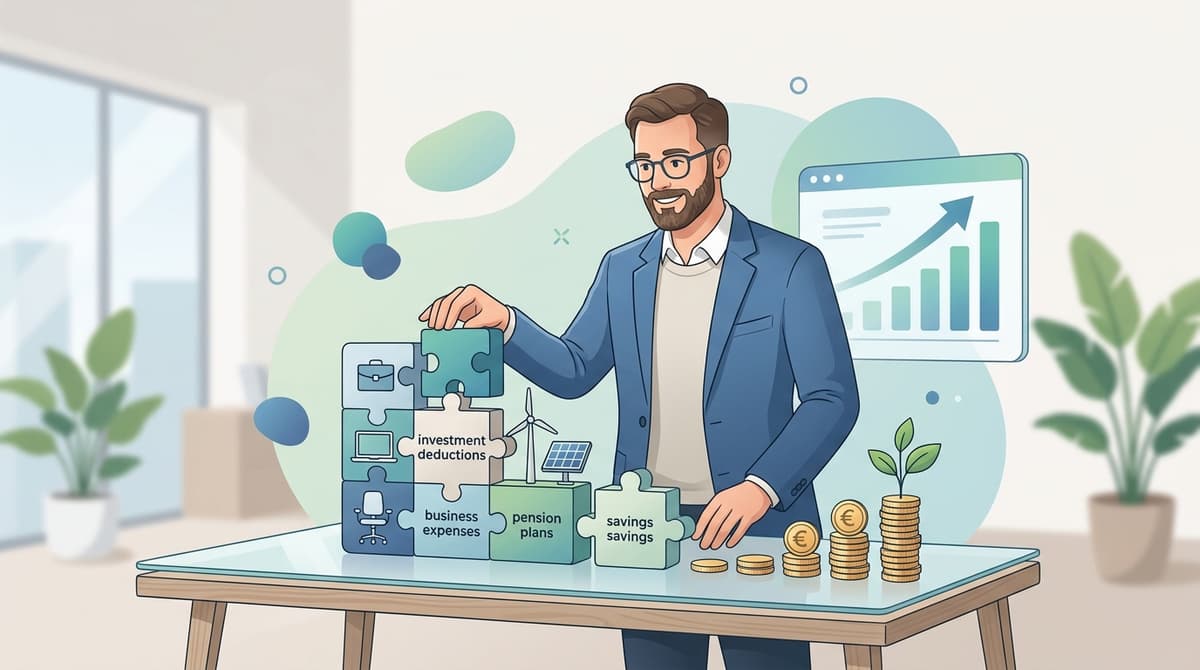
Tax Savings for Entrepreneurs: Smart Tips
As an entrepreneur, you naturally want to pay as little tax as possible. There are several ways to legally and responsibly reduce your tax burden. This article provides insight into the possibilities for entrepreneurs to save on taxes.
What is tax savings for entrepreneurs?
Tax savings for entrepreneurs means legally reducing your tax burden. This is done by optimally utilizing all available deductions, schemes, and exemptions offered by the Tax Authorities. It is not evasion, but a smart way to optimize your financial situation. Many entrepreneurs, from freelancers to SMEs, miss out on potential tax advantages because they are not aware of all the possibilities. By actively engaging in tax savings for entrepreneurs, you can keep more money to invest in your business or for private purposes.
Who Does This Apply To?
Tax savings are relevant for all types of entrepreneurs, regardless of the legal form of their company. This includes: * ZZP'ers (Self-employed without personnel): As a ZZP'er, you are directly responsible for your own tax return and utilizing the available deductions. * Sole proprietorships: Like ZZP'ers, as the owner of a sole proprietorship, you directly benefit from tax advantages. * SMEs (Small and Medium-sized Enterprises): There are also various possibilities for SMEs to reduce corporate income tax (Vpb). * BVs (Private Limited Companies): As a director-major shareholder (DGA) of a BV, you can optimize your tax burden through your salary and other schemes. Whether you are just starting as a startup or have been an established company for years, tax savings for entrepreneurs is always relevant.
How Does It Work in Practice?
Tax savings is a continuous process that starts with good administration and knowing the rules. Here are some concrete steps: 1. Keep accurate records: Make sure you properly record all income and expenses. This is essential to claim your deductions. 2. Use the self-employment allowance: If you meet the hours criterion (spend at least 1225 hours per year on your business), you can use the self-employment allowance. In 2024, this deduction is €3,750. 3. Benefit from the start-up allowance: New entrepreneurs can benefit from the start-up allowance for the first three years, an extra deduction on top of the self-employment allowance. 4. Invest in business assets and use the investment allowance: If you invest in new business assets, such as a computer or machine, you may be able to use the small-scale investment allowance (KIA). For an investment of, for example, €10,000, you can deduct a significant amount. 5. Consider the old-age reserve (FOR): As a self-employed person, you can reserve part of your profit for your old age. This amount is deductible from your income. Suppose you reserve €5,000 per year, then you reduce your taxable income by this amount. 6. Optimize your salary as a DGA: As a DGA of a BV, you have the option to optimize your salary. A lower salary can lead to less income tax, but make sure you comply with the customary salary scheme. Example: Suppose you are a freelancer with a profit of €50,000 per year. By using the self-employment allowance and the start-up allowance, you significantly reduce your taxable income. In addition, you can deduct business expenses such as travel expenses (€0.21 per kilometer), telephone costs and office costs. This can significantly reduce your final tax assessment. Administratiekantoor Zandwijken can help you identify and apply all these regulations.

Important Rules and Points to Consider
When saving taxes as an entrepreneur, it is important to be aware of the applicable rules and deadlines: * Hours criterion: To be eligible for certain deductions, such as the self-employment allowance, you must meet the hours criterion. This means that you must spend at least 1225 hours per year on your business. Record your hours carefully. * Administration obligation: You are required to keep good and clear records. Keep all invoices, receipts and other relevant documents for at least 7 years. * VAT return: Do not forget to file your VAT return on time. The deadlines are usually at the end of each quarter. A late return can lead to fines. * Income tax return: File your income tax return before May 1st. Make sure you collect all the necessary data on time. * Changes in legislation: Tax legislation can change regularly. Stay informed of the latest changes to take full advantage of the schemes. For example, consult the website of the Tax Authorities or the Chamber of Commerce (KvK) for current information. Kennisbank can also be a source of information. It is crucial to remember that you are always responsible for the accuracy of your tax return. Errors can lead to additional assessments and fines.
Common Mistakes
Many entrepreneurs make the same mistakes when saving taxes as an entrepreneur. Here are some common mistakes: 1. No or poor administration: Not keeping good records is one of the biggest mistakes. Without a clear administration, you miss crucial deductions and unnecessarily miss out on tax advantages. 2. Forgetting deductions: Many entrepreneurs are not aware of all the deductions they are entitled to. Think of travel expenses, telephone costs, office costs, and study costs. 3. Not meeting the hours criterion: Entrepreneurs sometimes realize too late that they do not meet the hours criterion, which means they are not entitled to the self-employment allowance. 4. Not separating private and business: It is important to keep private and business expenses strictly separate. Mixing these expenses can lead to problems with the tax return. 5. Not taking VAT into account: VAT is an important part of your administration. Do not forget to state the VAT correctly on your invoices and declare it on time. 6. Filing the return late: Filing your tax return late can lead to fines. Make sure you keep a close eye on the deadlines.
Tips for Entrepreneurs
Here are some practical tips for entrepreneurs to save optimally on taxes: * Start your tax planning on time: Do not wait until the last moment to collect your data. Start planning your tax return early. * Use an accounting program: A good accounting program can help you keep your administration clear and identify deductions. * Attend workshops and courses: Stay informed of the latest developments in tax legislation by attending workshops and courses. * Consider a tax advisor: A tax advisor can help you optimize your tax return and advise you on the best strategies for your situation. * Checklist deductions: Make a checklist of all possible deductions and check it regularly. * Invest wisely: Consider investments that are fiscally attractive, such as energy-saving measures or business assets that qualify for the investment allowance. * Keep all receipts and invoices: Make sure you keep all receipts and invoices properly so that you can use them for your tax return.
When Is It Smart to Hire an Accounting Firm?
Hiring an accounting firm can be a smart move, especially if you: * Have little time to do your administration yourself. * Are not sure of all the rules and deductions. * Have more complex financial situations. * Are growing rapidly and want to outsource your administration. Administratiekantoor Zandwijken in Aalsmeer offers professional support with your bookkeeping, tax return and financial advice. We are happy to help you optimize your tax savings as an entrepreneur so you can focus on your core business. Contact us for a free consultation about our services.
Frequently Asked Questions
Question: What is the hours criterion? Answer: The hours criterion means that you must spend at least 1225 hours per year on your business to be eligible for certain deductions, such as the self-employment allowance. Question: What costs can I deduct as a freelancer? Answer: As a freelancer, you can deduct various costs, such as travel expenses, telephone costs, office costs, study costs and costs for professional literature. Question: What is the self-employment allowance? Answer: The self-employment allowance is a deduction for entrepreneurs who meet the hours criterion. In 2024, this deduction amounts to €3,750. Question: How often do I have to file a VAT return? Answer: In most cases, you must file a VAT return quarterly. The deadlines are usually at the end of each quarter.
Conclusion
Tax savings as an entrepreneur is essential for a healthy financial foundation for your company. By making optimal use of all available deductions and schemes, you can significantly reduce your tax burden. Good administration, knowing the rules and submitting your returns on time are crucial here. Consider hiring Administratiekantoor Zandwijken in Aalsmeer for professional advice and support. Contact us today to discover how we can help you optimize your tax savings as an entrepreneur and create more financial space.
Frequently Asked Questions
What is the hours criterion?
What costs can I deduct as a freelancer?
What is the self-employment allowance?
How often do I have to file a VAT return?
Sources & References
Dutch Tax Administration
Official website of the Tax Authorities with information about taxes and schemes for entrepreneurs.
Netherlands Chamber of Commerce (KvK)
Website of the KvK with information and advice for entrepreneurs, including tax tips.
Government of the Netherlands
Website of the Government of the Netherlands with general information about laws and regulations in the Netherlands.
More articles

Tax Advice for Entrepreneurs: Everything You Need to Know
As an entrepreneur, it is crucial to properly manage your tax affairs. Professional tax advice can help you optimally benefit from all available regulations and deductions, leaving you with more money for your business.
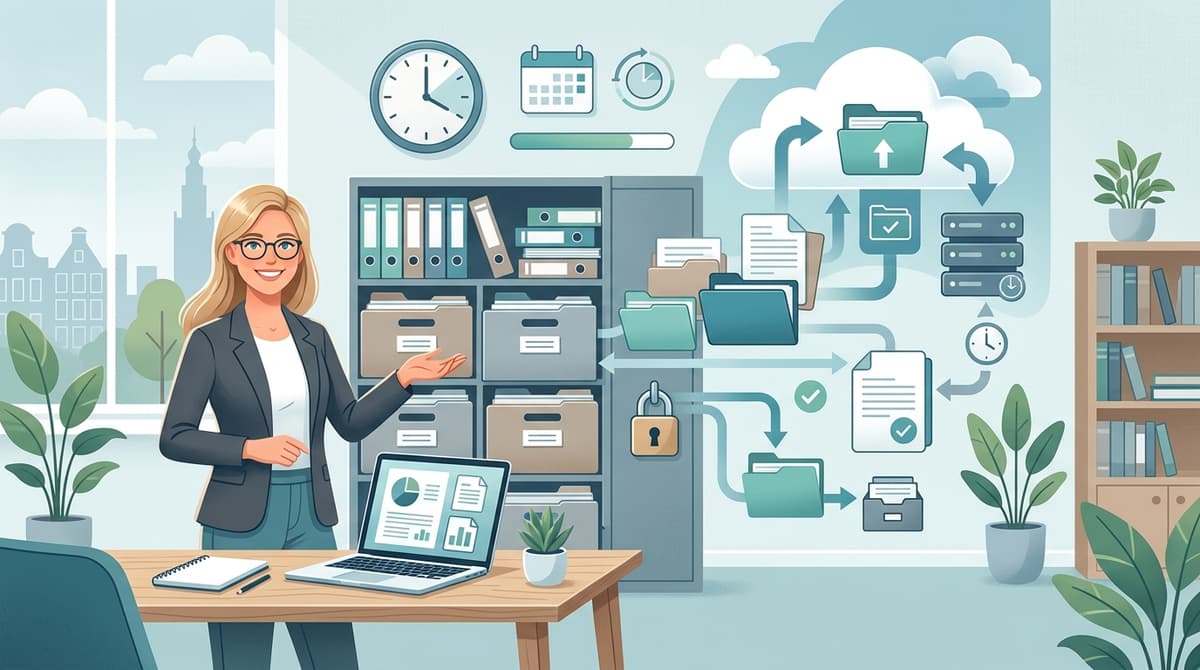
How Long to Keep Your Business Records?
As an entrepreneur, it's crucial to know how long you need to keep your business records. This blog explains the legal retention periods and provides practical tips.